Why It Happens and How to Respond Calmly
A few weeks ago, a parent in my consultation practice broke down while describing dinner with her 14-month-old:
“Riddhi, I spent 45 minutes making soft vegetable cutlets. I sat him down, and within thirty seconds, he picked one up, looked me dead in the eye, and dropped it right onto the floor. Then he did it with the next one. I felt so frustrated I just wanted to cry. Is he testing my patience, or does he just hate my food?”
If you have ever stood over a mess of scattered khichdi, splattered dal, or tossed roti pieces on your clean floor while your toddler smiles from their high chair, take a deep breath.
Your child is not testing your authority, and they aren’t trying to waste your hard work.
Food throwing is a completely normal developmental milestone. It’s simply their way of learning how things move, practicing using their hands, and telling you how they feel.
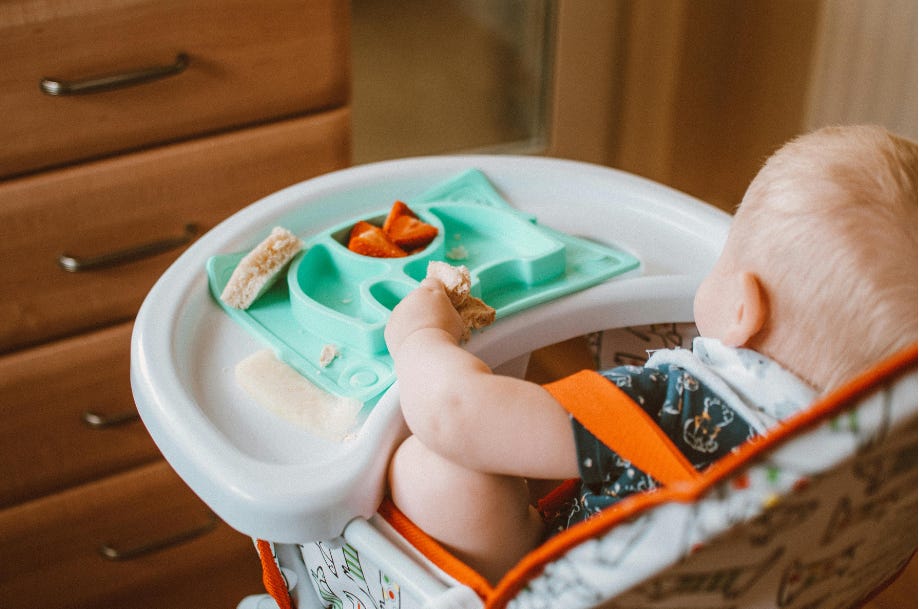
Why Toddlers Throw Food
When a toddler drops food from a high chair, adults view it through an adult lens: wasteful, rude, or defiant. But a toddler’s brain views it through an entirely different lens.
1. Testing Gravity (The “Drop and Watch” Phase)
Around 8 to 18 months, a child’s brain becomes fascinated with cause and effect. They are learning spatial concepts: What happens when I let go? Does it fall down or up? Does a piece of paneer make the same sound as a metal spoon when it hits the tile? They drop things simply to test gravity.
2. Communicating “I Am Full” or “I Am Overwhelmed”
Toddlers rarely have the language to say, “Mom, my stomach is full,” or “This texture feels too wet for me today.” Dropping or swiping food off the tray is often their very first physical sign of communication to say: “I am done with this meal.”
3. Seeking a Strong Reaction
If throwing a piece of roti makes a parent gasp, jump up, or yell “No, don’t throw!”, the toddler’s brain registers that as a powerful, instant reaction. To a child, even negative attention is exciting feedback. If throwing food gets a big reaction, they will repeat it to see if they can trigger that “magic button” again.
How to Stop the Throwing Without Yelling or Stress
1. Use a “No Thank You” Bowl (An Alternative Sensory Outlet)
Instead of just telling a child “Don’t throw,” give their hands a clear alternative. Place a small, empty, unbreakable bowl on the corner of their tray.
Teach them: “If you don’t want the food on your tray, put it in the ‘No Thank You’ bowl.” You may need to hand-over-hand guide them the first few times. This respects their need to remove unwanted food from their space without putting it on the floor.
2. Serve Micro-Portions (Less Food = Less Throwing)
Placing a large bowl of food or a heavily loaded plate in front of a toddler can cause sensory overwhelm. The more food on the tray, the more tempting it is to swipe off.
Offer 1 or 2 small bites at a time. Keep the rest of the meal on your plate out of reach. When they finish or accept those bites, offer 2 more. If they throw 1 small piece of carrot, the cleanup and drama are instantly minimized.
3. Stay Emotionally Neutral
When food hits the floor, keep your voice completely flat and unbothered. Avoid dramatic gasps, long lectures, or angry eye contact.
- Say calmly: “Food stays on the tray or goes in the bowl.”
- Pick up the piece without making a show of it, or simply leave it on the floor until the end of the meal so it doesn’t become a game of catch.
4. Recognize the “Done” Cue and End the Meal
If your child throws food 2 or 3 times in a row despite gentle reminders, their body is telling you the meal is over.
Without anger, calmly say: “It looks like your tummy is full and your body is ready to play. We are all done.” Unbuckle them and take them down. If they were genuinely hungry, they would be exploring the food with their mouth, not using it as a toy.
2 Quick “Mess-Minimizing” Snack Ideas
When going through an intense food-throwing phase, serving foods that are easy for tiny hands to grasp and easy to clean up if dropped, helps keep your sanity intact.
Recipe 1: Soft Baked Suji & Veggie Sticks
A firm, non-sticky finger food that holds its shape well, making it easy to grip without disintegrating into a wet mess.
- Ingredients:
- ½ cup Suji (Semolina), dry roasted slightly
- ½ cup thick curd (dahi)
- ¼ cup finely grated carrots or bottle gourd (lauki)
- A pinch of cumin powder and salt
- ½ tsp Ghee for greasing
- Method:
- Mix suji, curd, grated veggies, cumin, and salt into a thick batter. Let it rest for 10 minutes.
- Spread the batter into a small greased tray or baking dish (about ½ inch thick).
- Steam for 10 minutes until firm.
- Once cooled, cut into long finger-sized sticks. Serve warm.
Recipe 2: Roasted Paneer & Makhana Bites
Minimal mess, high nutrition, and low-moisture for stress-free mealtime practice.
- Ingredients:
- ½ cup fresh Paneer, cut into thick cubes
- ½ cup Makhana (Fox nuts)
- 1 tsp pure Ghee
- A tiny pinch of roasted cumin powder and turmeric
- Method:
- Heat ghee in a pan on low heat. Add the makhana and roast until crisp. Remove and set aside.
- In the same pan, gently toss the paneer cubes with turmeric and cumin powder for 1–2 minutes until soft and warm.
- Serve a few pieces at a time on your toddler’s tray.
The Thought I’d Leave You With
Throwing food is a phase, not a permanent habit. It feels frustrating when you’ve poured love into a meal, but try to remember:
Your toddler is exploring how the world works, not trying to ruin your day.
Keep your voice calm, keep the portions small, and give their little hands a safe outlet. When we remove the battle from the table, peace naturally returns.
Is your little one currently in a food-throwing phase? What food ends up on the floor most often at your house? Let me know in the comments below!