This is one of the most common questions I hear in consultations. And whenever a parent asks it, I can hear what’s underneath the words — it’s not just about limited eating. It’s the feeling that meals are getting harder, that variety is shrinking instead of growing, and that somehow you’re moving backwards from where you were six months ago.
A parent told me recently that her eighteen-month-old would only eat plain rice, banana, and curd. “That’s it,” she said. “Three things. Every day. I don’t know what happened.”
I want to start where I start with every family who brings this to me: in most cases, this is not a medical problem. It’s a developmental phase — an incredibly common one — and understanding why it happens changes how you respond to it
.
Why It Feels Like a Loss
When your child was a baby, they probably ate most of what you offered. New flavors were met with curiosity. Different textures were explored without much resistance. You may have felt quietly proud of how well feeding was going.
So when that same child narrows their entire diet down to three or four items and refuses everything else, it doesn’t just feel like picky eating. It feels like regression. Like something you built carefully has come undone. Parents start asking themselves whether they introduced foods wrong, whether they’re spoiling their child, whether this is going to be permanent.
It’s not. But I understand why it feels that way.
What’s Actually Going On
Between ages one and five, children become more selective with food. This isn’t a failure of parenting. It’s three developmental forces converging at once.
- Growth slows, and appetite follows. Toddlers don’t grow at the pace infants do. Their caloric needs genuinely drop, and their portions shrink accordingly. What looks like picky eating is often just a smaller appetite doing its job. A child who needs less food will naturally become more choosy about what they spend that smaller appetite on.
- Familiar foods feel safe. At this age, children crave predictability in a world that feels increasingly big and uncontrollable. Sticking to foods they already know and trust is a protective instinct — food neophobia, as it’s formally called. It’s not a disorder. It’s a feature of normal development, one that historically kept newly mobile toddlers from putting dangerous things in their mouths.
- Food becomes a domain of control. A toddler has very little say over their day. When they wake up, what they wear, where they go — most of it is decided for them. But what goes into their mouth is one area where they hold absolute power. Limiting food choices is often less about the food and more about a child practicing the experience of deciding.
How to Tell If This Is Normal
This is the part parents need most, because the fear isn’t really about today’s meal. It’s about whether something is genuinely wrong.
If your child is growing at a steady rate along their own curve, has energy to play and sleep well, hits their developmental milestones, and their list of accepted foods shifts and rotates over time — even if it’s small — you’re on safe ground. A child who eats the same three things for a week but different three things the following week is a child whose selectivity is developmental, not pathological.
Also worth noting: children don’t eat evenly from day to day. One day might be two bites of banana and some milk. The next might be a full bowl of khichdi and fruit. The picture only makes sense when you zoom out over three to five days. Almost always, the nutrition balances out better than any single meal would suggest.
When It’s Worth Looking Deeper
There are situations where selective eating goes beyond typical development, and it’s important to know what those look like.
If your child eats fewer than ten to fifteen different foods total — not ten at one meal, but ten across their entire repertoire — that’s worth a conversation with your pediatrician or a feeding specialist. The same applies if they’re dropping entire food groups or textures, refusing all crunchy foods or all soft foods regardless of flavor. If mealtimes cause genuine distress — gagging, crying, vomiting, or panic when an unfamiliar food is placed near them — there may be an underlying sensory processing issue that patience alone won’t resolve. Stagnant or declining growth over several months, or visible difficulty with the mechanics of chewing and swallowing, are also signals to seek support.
The line between “developmental phase” and “needs professional help” isn’t always obvious. If something in your gut says this feels like more than a phase, trust that instinct. A quick conversation with your pediatrician can either give you peace of mind or get you started on the right support — and both of those are good outcomes.
What Tends to Make It Worse
When variety shrinks, the instinct is to try harder. More options, more creativity, more effort. But some of the most common responses accidentally deepen the pattern.
Making separate “kid-friendly” meals teaches the child that their limited list is permanent — that these are “their” foods and everything else is for adults. Constantly offering alternatives when food is refused turns every meal into a negotiation where the child learns that holding out leads to something better. Pressuring them to take “just one bite” adds emotional weight to the act of tasting, which makes new foods feel riskier rather than safer. And labeling your child as a picky eater — out loud, to family, in front of them — gives them an identity to live up to. Children absorb labels faster than we realize, and they tend to become what we repeatedly tell them they are.
What Actually Works
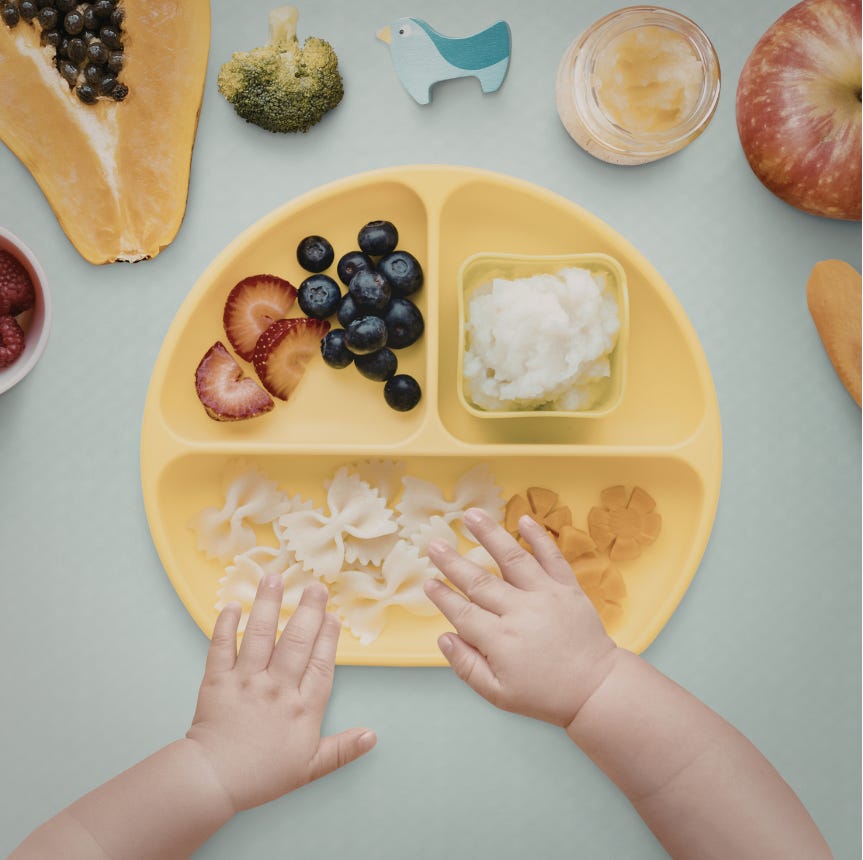
The shifts that help here are not about expanding the menu. They’re about making the table feel safe enough that expansion can happen on its own.
- Keep offering without asking. Put a small amount of a new or previously refused food on the plate alongside their usual items. Don’t mention it. Don’t ask them to try it. Don’t watch to see if they touch it. Just let it exist on the plate. Exposure doesn’t require eating — looking at a food, being near it, seeing you eat it, all of that counts. It doesn’t look like progress. It is.
- Always include one safe food. Every meal should have at least one item you know they’ll eat. This isn’t giving in. It’s removing the survival pressure from the meal so the child can approach the rest of the plate from curiosity rather than anxiety. A child who knows they won’t go hungry is a child who might reach for something new.
- Track over days, not meals. This one is as much for you as it is for the child. When you stop judging every individual meal and start looking at three to five days as a whole, the picture is almost always more balanced than it felt in the moment. The anxiety drops, and when your anxiety drops, theirs does too.
- Eat with them. Sit down, eat the same food, and don’t stare at their plate. Talk to your partner, to your other children, to them — about anything that isn’t food. A child who watches relaxed eating happening around them learns more from that than from any instruction or encouragement. Modeling is slow. It’s also the most reliable tool in feeding.
- Watch for subtle pressure. This is the hardest one because most of it doesn’t feel like pressure. “If you eat one more bite, you can watch TV” is obvious pressure. But “this potato is so yummy, don’t you want to try it?” is pressure too — it’s just wrapped in enthusiasm. The safest approach is descriptive and neutral. “The soup is warm today” carries no expectation. The child can engage with it or ignore it, and either response is fine.
The Thought I’d Leave You With
When a child eats only a few foods, it feels like something is missing. And in a narrow sense, something is — variety, nutrition balance, the ease you used to feel at meals. But your child isn’t stuck. They’re practicing control, learning what feels safe, and growing at their own pace through a phase that nearly every toddler enters.
Progress in feeding is almost never a straight line. It’s a child who ignores the cucumber for two weeks and then picks it up on day fifteen. It’s a food that was loved, then refused, then accepted again months later as if nothing happened. It’s small, quiet, and easy to miss if you’re only looking for clean plates.
If this sounds like your home right now, you’re in very good company. And it almost always improves — with time, consistency, and a table that feels calm enough to be curious at.
I’d love to know: what are the three foods your child is currently living on? Hit reply and tell me. I’ve heard some surprising ones over the years, and yours might make another parent feel a lot less alone.
If this article helped you feel more confident at mealtimes, you can receive weekly feeding insights directly in your inbox by subscribing to our newsletter- https://babyledweaningindia.substack.com/