This is one of those universal parenting dilemmas that almost every family asks about at some point. And I completely understand why it is so deeply maddening.
It simply doesn’t seem to make logical sense. Your child flatly refuses a nutritious bowl of dal and rice. They push away the vegetables. They barely touch their lunch. But exactly forty-five minutes later?
“Mamma, give me a biscuit.”
“I want some Makhana”
“Can I have a piece of cake?”
A parent recently confessed to me during a consultation: “If he is genuinely hungry enough to eat snacks, why isn’t he hungry for real food? Is he becoming picky, or am I doing something completely wrong?”
The answer is almost always neither. Most children who snack happily but refuse structured meals aren’t trying to be defiant or difficult. They are simply responding to how a small child’s appetite naturally functions. Once you understand the hidden mechanics behind this behavior, the entire pattern starts to make a lot more sense.
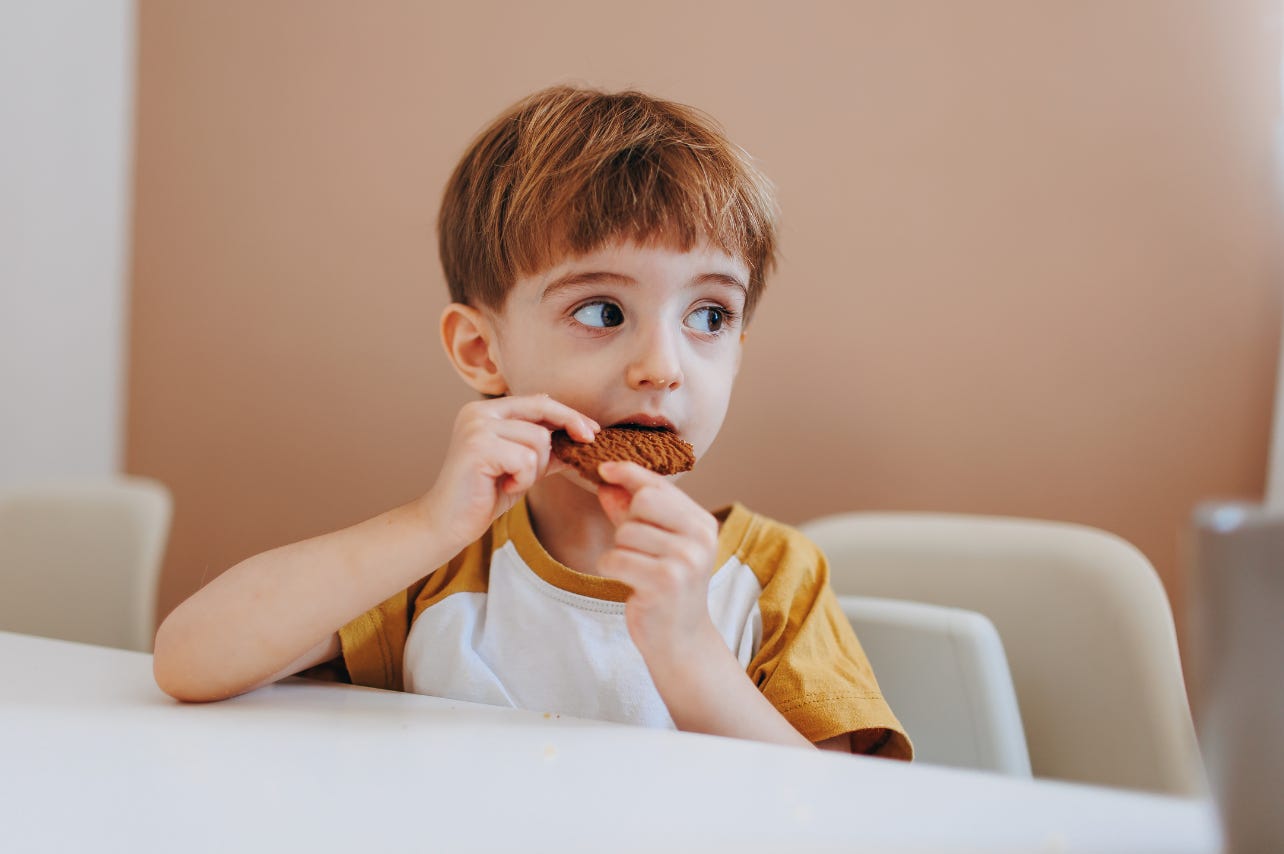
Hunger Is Not a Flat Line All Day
One of the biggest misconceptions about children’s eating habits is the expectation that they should arrive at every single meal equally hungry. Adults don’t eat that way, and children certainly don’t. A toddler’s appetite changes drastically day-to-day based on physical activity, sleep quality, sudden growth spurts, fighting off a minor illness, emotional changes, and even the weather outside. Some meals will naturally be large, while others will be surprisingly, shockingly small. That variability is completely normal.
Snacks Are Simply “Easier” Than Meals
Think about the foods children typically gravitate toward during snack time: a banana, a biscuit, soft fruit slices, makhana, crackers, or yogurt. These foods have something in common. They are deeply familiar, quick to consume, require very little oral motor effort or chewing, and are usually served without any behavioral expectations.
Structured family meals are a completely different sensory experience. Meals often involve sitting still for a longer period, navigating multiple distinct foods on one plate, dealing with unfamiliar vegetables, participating in family conversation, and facing an unspoken pressure to “eat properly” or finish the plate. Sometimes, children aren’t actually refusing the food itself. They are refusing the intense physical and emotional effort that a full meal requires from them.
Grazing Quietly Fills Small Stomachs
This is a structural pattern I notice in my practice all the time. A parent will tell me that their child hardly eats a bite of lunch. But when we look closely at the diary of their morning, it looks a little like this: a cup of milk right after waking up, a single biscuit in the car, a few grapes while playing in the living room, a little juice, half a banana, and a small handful of puffs.
By the time lunchtime rolls around, the child isn’t actually hungry. It isn’t because they ate a proper meal, but because they have been continuously grazing all morning. Even tiny, sporadic bites can quietly fill a small child’s stomach, completely erasing the sharp hunger cue needed to sit down for a real meal.
Familiar Foods
Children naturally reach for foods they know intimately, especially during phases of teething, exhaustion, developmental growth, or recovering from a cold. A familiar, packaged snack feels entirely predictable. Every single biscuit in that box tastes exactly like the last one.
Meals, however, bring visual and sensory uncertainty. Different textures, varying smells, and shifting expectations. It is completely understandable that a tired child will choose the easier, more predictable option when it is available.
Sometimes It Is Simply a Timing Error
I have watched this scenario unfold many times. A child refuses their lunch at 1:00 PM. The parents worry that the child will starve, so they offer a small snack at 1:30 PM. The child happily devours it. On the surface, it looks like the child intentionally rejected lunch just to get the snack. But often, the snack simply arrived at the exact moment the child’s natural appetite finally kicked in. Timing matters far more than we realize.
The Rescue Cycle That Makes It Worse
When a meal is refused, our loving parental instinct is to ensure our child doesn’t go to bed hungry. So, we offer a quick backup snack, a bottle of milk, or an alternative food we know they will accept without a fight. It feels incredibly reassuring in the moment.
However, over time, children unconsciously learn a predictable pattern: “If I wait out the hard meal long enough, something much easier and more familiar will arrive.” No child plans this out maliciously; they are simply responding to a routine that we have accidentally reinforced.
Actionable Steps to Shift the Routine
If you want to move away from the snack-only cycle, start focusing on these foundational adjustments:
1. Create Predictable Eating Intervals
Children thrive on structure. Aim for a simple daily rhythm:
Breakfast → Mid-Morning Snack → Lunch → Evening Snack → Dinner
Knowing that another structured eating opportunity is reliably coming helps children arrive at the table comfortably hungry; not starving or desperate, but ready to eat.
2. Keep Snacks Light & Balanced
A snack’s job is to take the sharp edge off hunger, not replace the next meal.
Focus on smaller, manageable portions.
Always pair a carbohydrate with a bit of protein or healthy fat (e.g., fruit with curd or paneer) to sustain energy without overfilling a small stomach.
3. Avoid Immediate “Meal Rescues”
If your child chooses not to eat their lunch:
Calmly remove the plate without anger or commentary.
Let them wait until the scheduled afternoon snack a few hours later.
Children quickly learn that meals are a distinct opportunity to eat, rather than a negotiable hurdle before a favorite snack arrives.
4. Make Meals Physically Easier
- Add a Safe Food: Always include at least one familiar, preferred food on their plate so they don’t feel overwhelmed.
- Remove the Pressure: Step back, cut down on verbal reminders to “take another bite,” and simply sit back and enjoy your own meal alongside them.
Children are infinitely more willing to explore their plates when they don’t feel watched or micro-managed.
Practical Indian Snack Ideas That Don’t Spoil Dinner
Instead of processed or high-sugar items that flood their system quickly, opt for whole-food snacks that provide real nutrition in small volumes. Try mixing up their weekly routine with these simple, nutrient-dense options:
- Fruit with thick curd (dahi)
- Why it works: Provides hydration from the fruit balanced by protein and healthy fats to keep blood sugar stable.
- How to Offer:
- 6–12 Months: Mix mashed ripe fruit (banana, mango, papaya, or stewed pear) directly into full-fat, well-whisked plain curd. Offer via pre-loaded spoon or let them explore with hands.
- 12–24 Months: Serve small, bite-sized soft fruit cubes gently folded into thick Greek yogurt or hung curd for easy spooning or finger-dipping.
- 2+ Years: Offer a self-serve “yogurt bowl” topped with chopped seasonal fruits and a sprinkle of powdered nuts or roasted chia seeds.
- Fresh paneer or cheese cubes
- Why it works: Easy to chew, rich in calcium and protein, and highly satisfying without filling up a tiny stomach.
- How to Offer:
- 6–12 Months: Offer fresh, un-salted paneer cut into long, finger-length rectangular strips (about the size of two adult fingers) so baby can easily grasp and gnaw on it.
- 12–24 Months: Dice fresh paneer into small, bite-sized 1 cm cubes. You can also offer lightly pan-seared paneer strips.
- 2+ Years: Offer cubed paneer tossed with a pinch of mild cumin/turmeric or serve as soft paneer tikka bites.
- Roasted chana or makhana
- Why it works: Offers a satisfying crunch toddlers love while delivering steady energy through complex carbs and fiber.
- How to Offer:
- 6–12 Months: Do NOT offer whole roasted chana or whole makhana-they are severe choking hazards. Instead, blend roasted makhana into a fine powder and stir it into porridge or curd.
- 12–24 Months: Crush roasted makhana into coarse, flat pieces using a rolling pin before serving. For chana, offer coarse, skinless split chana (daria/roasted gram) crushed into small bits.
- 2+ Years: Serve whole roasted makhana once your toddler has a full set of molars and mature chewing mechanics. Always supervise closely. Avoid hard, unpopped kernels at the bottom of the bowl.
- Small homemade vegetable cheela
- Why it works: A great way to offer savory flavors and lentils in a soft, approachable pancake format that feels casual.
- How to Offer:
- 6–12 Months: Prepare soft, thin cheelas with finely grated vegetables (e.g., zucchini, bottle gourd, finely grated carrot). Cut into long, thick finger strips for easy self-feeding.
- 12–24 Months: Cut cheela into bite-sized squares or fun shapes using a cookie cutter. Serve plain or with a light side of curd.
- 2+ Years: Offer full-sized thin cheelas folded into roll-ups or served with mild homemade coriander/mint chutney.
- Steamed or boiled sweet corn cups
- Why it works: Naturally sweet and engaging to pick up, making it a low-pressure snack that satisfies their curiosity.
- How to Offer:
- 6–12 Months: Do NOT serve whole corn kernels. Offer a whole corn cob cut into small 2-inch rounds. Babies can hold the cob and scrape the soft kernel tops off with their gums. Alternatively, mash steamed kernels lightly into a coarse puree.
- 12–24 Months: Serve individual steamed corn kernels in a small cup for pincer-grasp practice, making sure kernels are well-steamed and soft.
- 2+ Years: Offer warm corn cups seasoned with a drop of butter, lemon juice, and a pinch of roasted cumin powder.
- Nut butter or Hummus with fruit / veggie sticks
- Why it works: Offers healthy fats and protein to slow down digestion, keeping energy steady without overwhelming their stomach.
- How to Offer:
- 6–12 Months: Spread a very thin layer of smooth peanut/nut butter or creamy hummus onto soft, warm toast strips or steamed carrot/cucumber spears. Never offer thick globs of nut butter straight from a spoon, as it poses a severe choking/stickiness risk.
- 12–24 Months: Serve smooth hummus or thin nut butter as a dip alongside soft banana slices, thin apple half-moons, or lightly steamed vegetable sticks.
- 2+ Years: Serve as a fun dip platter with raw cucumber, carrot sticks, apple slices, or whole-wheat crackers.
A Final Thought to Leave You With
When parents come to me, they often say, “My child is entirely surviving on snacks.” But when we unpack the day together, it is rarely a problem with the snacks themselves. It is almost always a mismatch of appetite, timing, routine, and a small stomach capacity that is being topped off little by little throughout the morning and afternoon.
Your long-term goal isn’t to eliminate snacks entirely. Growing children genuinely need those extra fuel stops. Your goal is simply to restructure them so they support their meals rather than replacing them. When children come to the family table comfortably hungry, free from pressure, and without a morning of constant grazing behind them, meals naturally become much easier. It won’t happen overnight, but it will happen steadily.
Let’s Chat!
What is your child’s absolute favorite, must-have snack at the moment? The one food they will always say yes to, no matter what time of day it is?
Hit reply or leave a comment below. I am always fascinated to see which specific foods become the absolute favorites in different households!
Explore the full archive of guides right here: BLW India Post Archive
If this article helped you feel more confident at mealtimes, you can receive weekly feeding insights directly in your inbox by subscribing to our newsletter- https://babyledweaningindia.substack.com/