If you grew up in an Indian household, chances are ghee was treated as the ultimate medicine, energy booster, and culinary essential all in one. From the moment a baby transitions to solid foods, well-meaning grandmothers and elders eagerly offer advice: “Add another spoon of ghee to the dal,” “It makes bones strong,” or “It helps them gain weight!”
While traditional wisdom gets a lot right about ghee, modern feeding practices often swing to an extreme: pouring melted ghee over every single meal until the plate is swimming in fat.
So, where is the balance? Is ghee really the nutritional superpower we claim it to be, or can you actually overdo it? Let’s break down the science, the portion guidelines by age, and how to use ghee purposefully without overwhelming your child’s appetite or digestion.
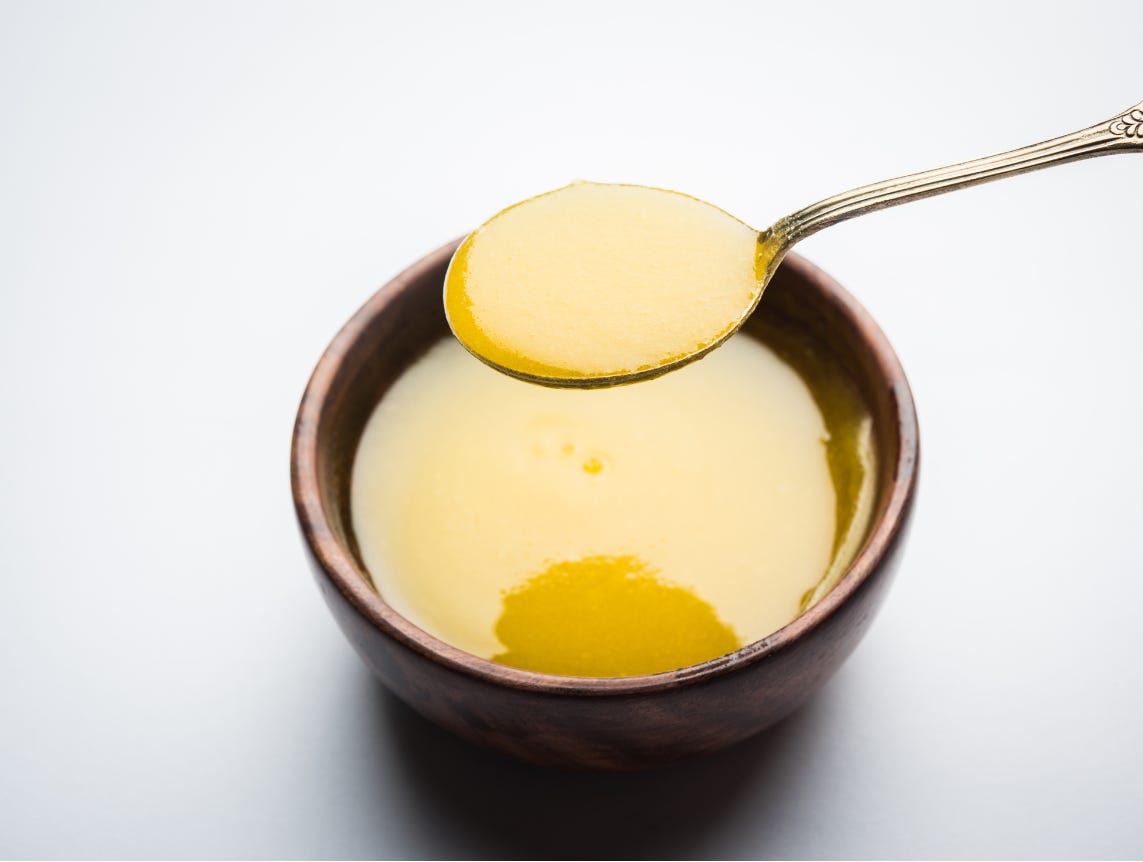
Why Ghee is Great for Growing Bodies
Ghee isn’t just empty calories. It is a concentrated source of energy and fat-soluble nutrition tailored for rapid growth:
- Brain Development: Up to 60% of the human brain is composed of fat. Essential fatty acids in ghee provide the structural building blocks needed during the critical first 1,000 days of life.
- Absorption of Key Vitamins: Fat-soluble vitamins like Vitamin A, D, E, and K require dietary fat to be absorbed by the gut. Drizzling ghee over beta-carotene-rich carrots or sweet potatoes significantly boosts vitamin uptake.
- Gut Health & Butyric Acid: Ghee contains natural butyrate (butyric acid), a short-chain fatty acid that nourishes the lining of the gut, supports smooth digestion, and reduces inflammation.
- Caloric Density for Small Stomachs: Young toddlers have stomachs roughly the size of their fist. A tiny teaspoon of ghee adds clean calories without filling up precious stomach volume.
Recommended Daily Ghee Intake by Age
The goal is balance, not overload. Ghee should complement a diet rich in vegetables, grains, proteins, and fruits; not replace them.
+----------------+--------------------------+-------------------------------------+
| Age Group      | Recommended Daily Amount | Best Serving Method                 |
+----------------+--------------------------+-------------------------------------+
| 6–12 Months    | 1/2 to 1 teaspoon total  | Stirred into warm porridge, khichdi,|
|                | per day                  | or dal                              |
+----------------+--------------------------+-------------------------------------+
| 12–24 Months   | 1 to 2 teaspoons total   | Brushed on rotis, mixed into rice,  |
|                | per day                  | or used for pan-searing tikkis      |
+----------------+--------------------------+-------------------------------------+
| 2 to 5 Years   | 2 to 3 teaspoons total   | Used across daily family cooking,   |
|                | per day                  | parathas, or roasted makhana        |
+----------------+--------------------------+-------------------------------------+
Note: These daily totals include all ghee used across all meals in a 24-hour period. If your child eats other healthy fats (such as full-fat curd, paneer, nut butter, or avocado), you can easily adjust ghee toward the lower end of the range.
Signs You Might Be Serving Too Much Ghee
More is not always better. Here are four common signs that your child might be getting an excess of ghee:
- Loss of Appetite at Meals: Fat slows down digestion. If a child consumes too much fat early in a meal, their stomach signals fullness before they have eaten enough protein, iron, or complex carbs.
- Refusing Whole Foods / Textures: Excessively slick or oil-coated food can change mouthfeel, making veggies or grains slippery and unappealing to cautious chewers.
- Loose Stools or Greasy Diapers: Unabsorbed fat passing through the digestive tract can lead to overly soft, shiny, or foul-smelling stools.
- Poor Weight Gain (Paradoxically): When meals are overloaded with fat, toddlers often drink less or eat fewer total mouthfuls, inadvertently reducing their overall nutrient variety and caloric intake across the day.
3 Smart Ways to Use Ghee Purposefully
Pair Ghee with Fat-Soluble Produce: Stir half a teaspoon into carrot puree, pumpkin soup, or spinach dal to maximize Vitamin A and K absorption.
Use It as a Natural Flavor Enhancer: Temper whole cumin seeds or mustard seeds in warm ghee before stirring into lentils. The fat carries the aromatic spices, making savory foods far more appetizing.
Keep Rotis & Bhakris Soft: A light brush of ghee on a warm ragi or bajra roti seals in moisture, making tough ancient grains tender and easy for young jaws to chew.
Here are 2 nutrient-dense, weight-gain-supportive recipes featuring ghee, along with their age-appropriate safety guidelines.
Ghee-Roast Paneer & Sweet Potato Mash
Ingredients:
- 1/2 cup sweet potato (steamed/boiled until soft)
- 1/4 cup fresh paneer (grated or finely crumbled)
- 1 to 1.5 tsp A2 ghee
- 1/4 tsp roasted cumin powder (jeera)
- A pinch of turmeric powder
Method:
- Heat ghee in a small pan on low heat. Add cumin powder and turmeric until aromatic.
- Add the crumbled paneer and sauté for 1–2 minutes until soft and warm.
- Add the steamed sweet potato and mash everything together directly in the pan using the back of a fork.
- Stir until warm, well combined, and glossy with ghee. Serve lukewarm.
- How to Offer
- 6–12 Months: Ensure the sweet potato and paneer are mashed completely smooth into a soft, warm spoonable mash.
- 12–24 Months: Leave as a soft, textured mash for self-feeding with a spoon, or roll into small, soft finger-sized balls.
- 2+ Years: Serve as a rich side dish alongside a warm roti or toast.
Nutty Ragi & Date Halwa
Ingredients:
- 2 tbsp ragi (finger millet) flour
- 3 dates (pitted, soaked in warm water for 15 mins, and pureed)
- 1.5 tsp ghee
- 1 tsp powdered nuts (almonds/cashews ground into fine flour) (Allergen: Contains Tree Nuts)
- 3/4 cup warm water or milk (dairy/breastmilk/formula based on age)
Method:
- Heat ghee in a pan on low heat. Add ragi flour and roast for 3–4 minutes until aromatic and slightly darker in color.
- Slowly pour in warm water or milk while whisking continuously to prevent lumps.
- Stir in the date puree and powdered nuts.
- Cook on low heat for another 3–5 minutes until the mixture thickens into a glossy halwa that gently leaves the sides of the pan. Serve lukewarm.
How to Offer Safely by Age:
- 6–12 Months: Ensure the halwa is cooked thin and smooth (like a thick porridge). Use water for cooking and stir in breastmilk or formula after removing from heat if desired. Ensure nuts are ground into a ultra-fine flour to avoid choking risks.
- 12–24 Months: Serve as a rich, soft halwa off a spoon.
- 2+ Years: Garnish with extra finely slivered roasted nuts and serve as a warming evening snack.
Important Allergen & Safety Guidelines for Nuts:
- Common Allergen Alert: Tree nuts (almonds, cashews, walnuts, pistachios) and peanuts are top food allergens. Introduce each nut species individually in tiny amounts for 3–5 days before combining them into a multi-nut powder or recipe.
- Signs of an Allergic Reaction: Watch closely for hives, redness around the mouth, vomiting, swelling of the lips/tongue, or breathing difficulty after serving. Discontinue immediately and seek medical attention if symptoms occur.
- Choking Hazard Prevention: Never offer whole nuts, chopped nut pieces, or thick globs of nut butter to infants and toddlers under 5 years of age. Always ensure nuts are ground into a completely smooth, fine flour or thoroughly blended into a liquid.
Let’s Chat!
How is ghee used in your household? Do you stick to a light drizzle, or do you find yourself constantly battling grandmothers who want to add extra spoonfuls?
Leave a comment below or hit reply. I’d love to hear your experiences!
If this article helped you feel more confident at mealtimes, you can receive weekly feeding insights directly in your inbox by subscribing to our newsletter- https://babyledweaningindia.substack.com/
Check out our complete archive of expert parent guides here: BLW India Post Archive
Feeling Overwhelmed by Nutritional Gaps and Picky Eating?
If you are constantly stressing over whether your child is getting enough nutrition, fighting daily mealtime standoff battles, or feeling exhausted by selective eating habits, let’s fix it together.
Take the guesswork out of your toddler’s nutrition and build a joyful, well-balanced plate with my 10-Day Personal Session with Riddhi.