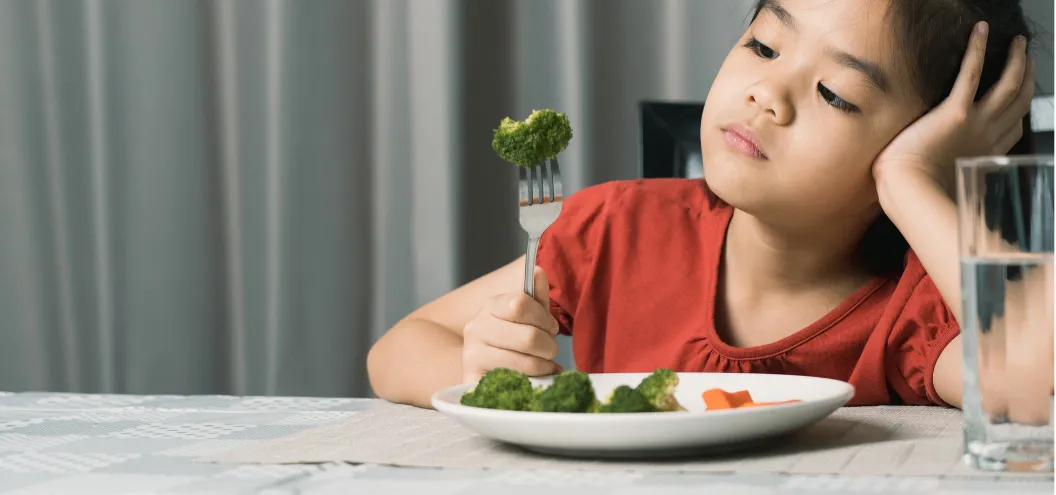
In almost every consultation I lead, there is one common thread: a story parents share with almost identical frustration about the ‘great mealtime standoff.’ It often looks like:
- A plate being pushed away with a frown.
- A firm, tiny “no” (or a very loud one!).
- A child refusing to even touch the food you spent time preparing.
- And us, as parents, wondering, “What am I doing wrong?”
Most of us start this journey with so much excitement. Let’s try something new today!” But after a few rejections, that excitement can quickly turn into hesitation and stress.
Here’s the big secret:
Resistance to new foods is not a problem. It’s a part of the process. How we respond to that “no” is what makes the biggest difference in the long run.
Why Children Resist New Foods
It’s helpful to remember that children are naturally cautious. This isn’t them being “stubborn” or “naughty”. it’s actually biology. From a developmental perspective, a new food is a sensory explosion. It brings: new tastes, different textures (slimy, crunchy, grainy!), strong smells
For a young child, that is a lot to process all at once. Their natural instinct is to pause, observe, and protect themselves by rejecting it. This stage is called food neophobia, and it’s very common between ages 1 and 5. It doesn’t mean your child won’t like the food forever. It just means they’re still deciding if they can trust it.
The “Gentle Pressure” Trap
When our child refuses a food, our instinct as loving parents is to try harder:
- “Just one tiny taste for Mamma?”
- “Try it, it’s yummy!”
- “If you eat this, you can have a treat after.”
We might even try to “hide” veggies in their dal or paratha. We do this out of pure care! But pressure- even the gentle, smiling kind usually backfires. The child stops focusing on the food and starts focusing on maintaining control.
A Simpler Way to Think About It
Instead of asking: “How do I make my child eat this?” Try asking: “How do I help my child get comfortable with this?” Because eating only happens once a child feels comfortable.
6 Ways to Help (That Actually Work)
Small shifts in how we serve food work far better than forcing a bite.
1. Start with a “Safe” Base
Always serve a new food alongside something your child already eats happily. Whether it’s plain rice, a piece of roti, or a slice of banana, having a “safe” food on the plate makes the new item feel less intimidating.
2. Keep Tiny Portions
A big bowl of a new vegetable can look like a mountain to a toddler. Instead, offer just one or two small pieces, or even just a “taste portion.” It lowers the stakes for everyone.
3. Take the “Taste” Expectation Off the Table
This is the hardest part! But removing the “you must eat this” rule actually fuels curiosity. Let your child look at it, touch it, smell it, or even totally ignore it. In the world of feeding, looking and smelling count as a “win.”
4. The Rule of 15
Did you know children often need 10 to 15 exposures before they accept a new food? Progress is quiet. One day they ignore it. Another day they might poke it with a finger. Eventually, they’ll taste it. Consistency is key!
5. Be the Role Model
Children learn by watching us, not by listening to our instructions. Eat the same food yourself calmly. No “performance,” no “mmm-yum” acting; just normal, relaxed eating. When they see you enjoy it, they learn it’s safe.
6. Keep the “Vibe” Calm
New foods are easier to explore when the house feels peaceful. If mealtime becomes a place of lectures or tension, the child’s appetite actually shuts down.
What to Avoid (The “No-Go” List)
- Forcing or insisting on a bite.
- Replacing the whole meal with a favorite snack immediately after they refuse.
- Labeling your child as a “picky eater” (they can hear us!).
A Helpful Reframe
When a child refuses a new food, they aren’t rejecting your cooking or being difficult. They are simply saying: “I’m not ready yet.” Readiness builds with exposure, safety, and time.
Final Thoughts
Children don’t learn to love new foods because they are told to. They learn because they feel safe enough to explore.
If mealtimes have been stressful lately, please know you aren’t alone. It’s one of the most common challenges we face as parents. The goal isn’t always to get a bite today. Sometimes, the goal is just to make tomorrow’s lunch feel a little easier.
I’d love to hear from you: What is the one food your child is currently refusing to touch? Is it the Karela? Broccoli? Drop a comment below and let’s support each other!
If this article helped you feel more confident at mealtimes, you can receive weekly feeding insights directly in your inbox by subscribing to our newsletter- https://babyledweaningindia.substack.com/