“My child eats dinner at 8:30 PM. Is that damaging their gut?”
This is a question that has been popping up in my consultation with increasing frequency. In a world saturated with wellness advice about intermittent fasting, circadian biology, and early dinners, it is easy to feel as though 8:00 PM is a rigid biological deadline where digestion simply shuts down.
Let me reassure you right away: There is nothing magical or dangerous about 8:00 PM.
Your child’s digestive system does not turn off at a specific clock time. What actually matters is the gap between dinner and sleep, what is on the plate, and how the overall daily rhythm looks. A child who eats at 8:15 PM and goes to sleep at 10:00 PM has a completely different physiological reality from a child who eats at 8:15 PM and is tucked into bed by 8:30 PM.
So, let’s take the pressure off the clock for a moment and look at what is really happening.
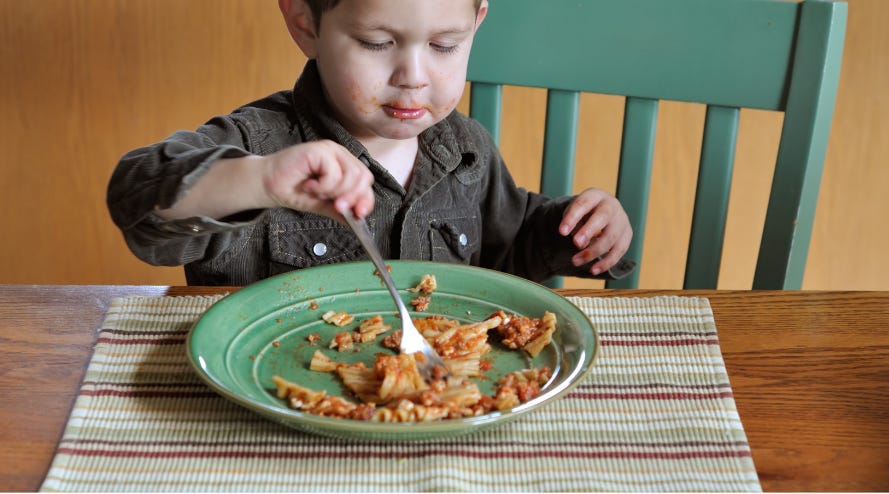
Your Child’s Gut Doesn’t “Stop” at Night
One of the biggest misconceptions in modern nutrition culture is that food eaten late sits “undigested” in the stomach overnight.
Your child’s body continues its normal digestive, absorptive, and metabolic functions throughout the night. The stomach processes the meal, the small intestine absorbs nutrients, and the gut microbiome remains active while they sleep.
Having dinner after 8:00 PM does not automatically cause gut damage. The real issue arises when a heavy meal is followed immediately by lying down.
The Gap Between Dinner and Sleep
When a young child eats a large meal and lies down shortly after, gravity is no longer helping keep stomach contents down. In susceptible children, this can contribute to:
- Acid reflux or silent regurgitation
- Abdominal fullness, gas, and bloating
- Restlessness and difficulty settling to sleep
- Frequent nighttime awakenings
However, every child’s digestive tolerance is unique. Some children comfortably digest a meal close to bedtime without issue, while others sleep noticeably better with a 90-minute to 2-hour window. Your child’s sleep quality is your best indicator; not an arbitrary rule on the internet.
How Late Dinners Shift the Whole Day’s Rhythm
When dinner gets pushed later, the entire evening cascade shifts: bath time gets delayed, storytime gets rushed, and bedtime slips past its ideal window.
An overtired toddler is rarely a good eater. They become cranky, distracted, or simply too exhausted to sit through a meal. Furthermore, a heavy 8:30 PM dinner can suppress morning appetite, leading to a ripple effect across the next day:
Late, heavy dinner ➔ Wakes up full ➔ Skips or delays breakfast ➔ Lunch shifts later ➔ Afternoon snack shifts later ➔ Dinner gets pushed late again
When a parent tells me, “My toddler barely touches dinner,” I don’t just look at the plate. I ask: What time did they wake up? When was their afternoon snack? What time are they going to sleep? The clock time of dinner is just one piece of a much larger daily rhythm.
What If Your Family Cannot Eat Earlier?
In many Indian households, an 8:30 PM dinner is standard. Parents return late from work, commutes are long, and family meals are a cherished way to connect at the end of the day.
If eating at 6:30 PM is not realistic for your family, you have not failed. Instead of stressing over what you cannot change, adjust what you can control:
Offer a Heartier 4:30–5:00 PM Snack: Serve a nutrient-dense afternoon snack (e.g., paneer cubes, boiled egg, nut butter toast, or a bowl of poha) so your child isn’t starving or cranky by evening.
Keep the Late Dinner Light & Simple: A simple, easily digestible meal works beautifully. Think khichdi, dal-chawal, roti with a simple vegetable, idli-sambar, or dahi-rice.
Keep the Meal Atmosphere Calm: A relaxed, unhurried meal at 8:00 PM is far better for your child’s nervous system and digestion than a frantic, stressed-out rush at 6:30 PM.
What About the Gut Microbiome?
While circadian rhythms do influence gut biology, we cannot jump from complex microbiome research to claiming that “eating after 8 PM ruins gut health.”
The quality and diversity of your child’s overall diet matter infinitely more than an hour’s difference on the clock. A varied, fiber-rich diet served at 8:15 PM is vastly better for the gut microbiome than a nutrient-poor meal served at 6:30 PM.
What to Focus On Instead of the Clock
Instead of obsessing over the time, evaluate your child’s evening using these four questions:
- Are they hungry at dinner? (If not, check if grazing between 4:00 PM and dinner is dampening their appetite).
- Is the meal easy to digest? (Avoid overly deep-fried or heavily spiced meals right before bed).
- How are they sleeping? (If they sleep soundly and wake refreshed, your routine is likely working well).
- Is there a predictable rhythm? (Children thrive on predictable meal intervals, even if the exact times shift slightly day to day).
The Thought I’d Leave You With
In pediatric feeding, there is rarely a single number that tells the entire story.
Not the number on the weighing scale.
Not the number of bites left on the plate.
And certainly not the number on the clock.
If your child is growing well, sleeping peacefully, and eating a varied diet, stop worrying about 8:00 PM. Focus on the big picture: nourishing food, a predictable rhythm, and a peaceful table.
What’s your average dinner time, and which feeding topic would you like us to break down next? Tell me in the comments below. I’d love to read what’s on your mind!
A gentle note: This article is for general educational purposes. If your child suffers from persistent acid reflux, abdominal pain, frequent vomiting, severe sleep disruption, or poor growth, please consult your pediatrician.
If this article helped you feel more confident at mealtimes, you can receive weekly feeding insights directly in your inbox by subscribing to our newsletter- https://babyledweaningindia.substack.com/
Check out our complete archive of expert parent guides here: BLW India Post Archive