Why ghee, nuts, seeds, curd, and other healthy fats deserve a place on your child’s plate and how to make everyday Indian meals more nourishing
In my 1:1 feeding sessions with parents, there is one worry I hear almost every single week:
“Riddhi, my baby eats just three spoonfuls of food and turns their head away. How will they ever get enough calories or grow properly on such tiny portions?”
Whenever a parent tells me this, I notice how much pressure they are putting on themselves to make that bowl bigger or to get “just two more bites” into their child. But in my practice, I always encourage parents to make one gentle mindset shift:
When a child has a small appetite, we don’t need a bigger bowl, we just need a more nutrient-dense spoon.
During the early years, children need energy to support rapid growth, brain development, movement, and learning. Fat plays an essential role in meeting these needs. Yet, when we talk about healthy eating for children, we often focus on protein, iron, calcium, and vegetables, while fats receive much less attention.
Let’s understand why healthy fats matter and how you can include them in everyday Indian meals without preparing a completely separate menu for your child.
Why Does Your Child’s Developing Brain Need Fat?
The brain develops rapidly during infancy and early childhood. Dietary fat provides concentrated energy and essential fatty acids that contribute to normal brain development and the functioning of the nervous system.
Certain fats, particularly omega-3 fatty acids such as DHA, are structural components of brain and retinal tissue. Fat helps the body absorb key fat-soluble vitamins (A, D, E, and K).
Eating more fat does not automatically make a child smarter. Brain development depends on a combination of adequate nutrition, sleep, responsive interactions, play, and a supportive environment. The goal is to provide adequate energy and a variety of essential nutrients, not to add unlimited amounts of fat to every meal.
Why High-Calorie Meals Help Small-Appetite Eaters
Young children have relatively high energy needs for their body size, but their stomachs are small. Their appetites naturally fluctuate based on growth spurts, teething, illness, or activity levels.
If your child consistently eats small portions, adding energy-dense ingredients helps them obtain more energy from the volume of food they already comfortably accept:
- Standard Bowl: A small bowl of plain khichdi.
- Enriched Bowl: A small bowl of khichdi cooked with moong dal, soft vegetables, a spoonful of ghee with full fat curd.
Both meals are nourishing, but the second provides more calories and a broader spectrum of nutrients without requiring a larger serving.
Seven Everyday Indian Foods That Boost Meal Calories
You don’t need expensive imported foods or special supplements to include healthy fats in your child’s diet. Many familiar kitchen staples offer exceptional nutrition:
1. Desi Ghee
Ghee is a concentrated source of fat that boosts the energy content of a meal in tiny quantities.
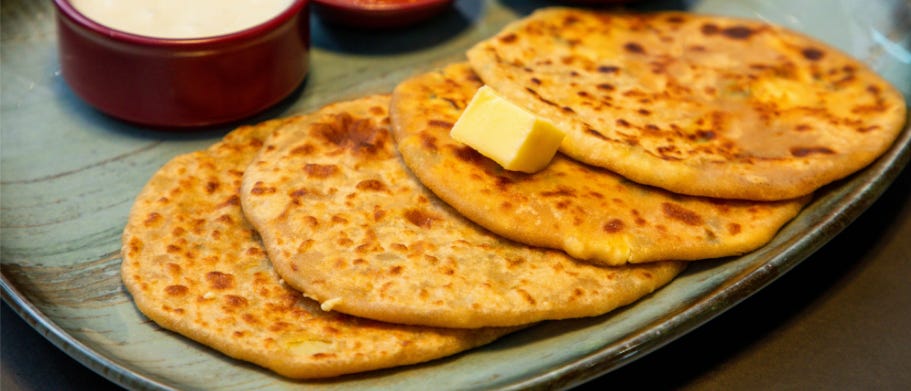
- Stir into dal-chawal, khichdi, vegetable pulao, ragi porridge, or spread on soft parathas.
- Ghee is predominantly saturated fat, so vary it with other fat sources, including unsaturated cooking oils.
2. Whole Eggs (For Non-Vegetarian / Egg-Eating Families)
Eggs are nutritional powerhouses for developing toddlers. Egg yolks are rich in fats, high-quality protein, iron, and choline- a critical nutrient that supports normal brain function and memory development.
- Offer soft-scrambled eggs, hard-boiled egg yolk mashed into warm porridge or dal, or prepare a soft egg bhurji cooked in ghee or oil.
- Cook eggs thoroughly until both whites and yolks are solid.
3. Fatty Fish & Tender Meats (For Non-Vegetarian Families)
- Offer soft, well-cooked, boneless fish (like pomfret, rohu, or salmon) stewed in curry or baked, tender shredded chicken dark meat (thighs have nearly double the iron and fat of breasts), or soft minced mutton/chicken kebab patties.
- Safety: Always remove every bone carefully from fish. Cut meats across the grain into soft, finger-width strips or tender mince so they are easy for babies to manage without choking. Avoid processed meats like sausages, bacon, or salami, which are high in sodium and preservatives.
4. Peanuts & Peanut Butter
Peanuts provide protein, energy, and unsaturated fats.
- Spread a thin layer of smooth peanut butter on toast, stir into porridge, or blend finely ground roasted peanuts into soft pancakes or ladoos.
- Whole peanuts are a choking hazard for young children. Thick spoonfuls of peanut butter can also be difficult to swallow, so spread it thinly or mix it into moist food.
5. Almonds, Walnuts & Tree Nuts
Nuts provide energy, unsaturated fats, fiber, and micronutrients.
- Add finely ground almonds or walnut powder into porridge, pancakes, or kheer.
- Always use finely ground nut powders or smooth nut pastes for young children to prevent choking risks.
6. Seeds (Chia, Flax & Sesame)
Flaxseed and chia provide ALA, while sesame seeds contribute healthy fats and essential minerals like calcium.
- Mix ground flaxseed into atta for soft rotis, stir fully hydrated chia seeds into dahi, or add finely ground sesame (til) powder to dosa batter or chutneys.
- Serve chia seeds fully hydrated in moist food- never dry by the spoonful.
7. Full-Fat Curd & Paneer
Full-fat curd and paneer provide protein, calcium, fat, and probiotics. Serve curd alongside soft khichdi, mash with ripe banana, or serve soft paneer cubes cooked lightly in ghee.
High-Energy Meal Ideas (Vegetarian & Non-Vegetarian Options)
Building on foods your child already enjoys is the simplest way to improve meal density. Here are practical combinations for family meals:
1. Paneer & Beetroot Tikkis OR Soft Mincemeat Kababs (Finger Food)
- Vegetarian: Grated full-fat paneer, mashed boiled potato, steamed grated beetroot, and roasted sattu (chana flour) for binding, pan-fried in desi ghee.
- Non-Vegetarian: Soft minced chicken or mutton (keema) with mashed sweet potato and mild jeera/dhaniya powder, pan-fried in ghee or cold-pressed oil.
- Shaped into wide, thick ovals (easy for a toddler’s palmar or pincer grasp), these patties deliver dense protein, healthy fats, and iron in a single bite.
- Pair with a side of thick dahi (curd) or an avocado-dahi dip.
2. High-Calorie Ragi-Banana Pancakes with Nut Butter Spread
- Finger millet (ragi) flour cooked with mashed ripe banana, a pinch of cardamom, and a splash of milk or water, cooked on a tawa with ghee.
- Spread a thin layer of smooth almond butter or peanut butter on top while warm, then slice into finger-length strips.
3. Creamy Coconut-Fish Curry OR Coconut-Tofu Stew with Soft Rice / Idli
- Non-Vegetarian: Soft, flaky, boneless fish (like pomfret or salmon) gently simmered in mild coconut milk, turmeric, and cumin.
- Vegetarian: Soft paneer cubes or pressed tofu simmered in the same mild coconut milk gravy.
4. Stuffed Paratha Roll-Ups (Paneer / Egg Bhurji / Chicken Mince)
- Whole-wheat atta kneaded with a spoonful of ground flaxseed powder or smooth curd to keep the flatbread extra soft.
- The Filling:
- Vegetarian: Grated paneer with finely mashed carrots.
- Non-Vegetarian: Soft-scrambled egg bhurji or tender, finely shredded chicken thigh.
5. Mashed Avocado & Egg Yolk (or Paneer) Dahi-Chawal Bowl
- Base: Soft, warm dal-chawal or curd rice.
- The High-Energy Twist:
- Non-Vegetarian: Stir in 1 hard-boiled egg yolk mashed with 2 tbsp of ripe avocado and a pinch of roasted cumin (jeera) powder.
- Vegetarian: Mash 2 tbsp of ripe avocado with crumbled full-fat paneer or a spoonful of nut powder directly into the warm curd rice.
How to Enrich Meals
Adding healthy fats should simplify mealtimes, not make them heavier. Keep these principles in mind:
- Add small amounts of ghee, nut powder, egg yolk, or curd to meals your child already accepts.
- Include protein and iron sources. Pair fats with dals, beans, eggs, meat, paneer, or vegetables.
- Avoid excessive milk intake. Drinking large amounts of milk throughout the day can reduce appetite for calorie-dense solid foods.
- Offer nourishing options without pressure, and let your child decide how much to eat.
The Takeaway
Every child’s feeding journey looks a little bit different. Some days they’ll happily eat everything on their tray, and other days two small bites will be all they want and that is completely normal. Remember to take a deep breath and trust that making small, nourishing tweaks to their everyday foods is doing wonders for their growing brain and body. You’re doing an incredible job.
What is your toddler’s absolute favorite way to eat healthy fats? Is it ghee-topped khichdi, paneer tikkis, or something else entirely? Hit reply or drop a comment below. I read every single one!
Want to Make Balanced Family Meals Effortless?
Planning nutritious, age-appropriate meals every single day can feel overwhelming especially when cooking for the whole family.
Join the BLW India Nutrition Club! Get weekly child-friendly Indian family meal plans (with vegetarian and non-vegetarian modifications) and age-appropriate serving guides delivered straight to your chat.