This is one of the most emotional conversations I have with parents of six-month-olds.
Not because anything is wrong. But because nobody prepares them for how completely underwhelming the first few weeks of solids can actually be.
The messages I receive from parents usually sound something like this:
“She’s just playing with the food.”
“He takes one lick and then throws everything on the floor.”
“We’ve been trying for two weeks and she barely swallows a thing.”
And then comes the real question hiding underneath all of it: “Is my baby supposed to be eating more by now?”
A mother recently sent me a video of her six-and-a-half-month-old sitting in her high chair. Mashed sweet potato was spread across her face, the tray, her hands, her bib, and somehow, even her hair.
“She doesn’t eat anything,” the mother wrote, followed by a stressed-out emoji.
I watched the video. The baby picked up the food. Squeezed it. Looked at it. Brought it to her mouth. Licked it. Spat some out. And then went back for more.
I replied to the mother with something that deeply surprised her: “Your baby is doing exactly what I would expect.”
The Expectation Problem
Many parents start solids believing that the goal is immediate consumption. They picture a few spoonfuls on Day 1, half a bowl by Day 7, and regular, clean meals shortly after.
But babies don’t see solids that way. At six months, most babies are not thinking, “How much can I eat to fill my tummy?” Instead, they are thinking: “What on earth is this?”
Everything about food is a brand-new sensory overload: The texture, The temperature, The smell, The complex sensation of moving something solid around the mouth
What looks like “playing” to us is actually data collection. It is learning. And in human development, learning always comes before eating.
Could They Just Not Be Ready Yet? (The Checklist)
While most 6-month-olds treat food like finger paint because they are just exploring, there is another very real reason for a baby not eating solids at 6 months: They might not be developmentally ready yet.
The “6-month mark” is a general guideline, not a biological switch that flips the morning your baby turns 180 days old. Every baby develops on their own unique timeline.
Before expecting your baby to swallow real food, check if they have met these essential Readiness Signs:
- Steady Head and Neck Control: Can they hold their head completely steady without it wobbling or slumping forward while sitting?
- Unassisted (or Lightly Supported) Sitting: Can they sit up straight in a high chair without leaning heavily to one side? (Good core strength is vital for safe swallowing).
- The Tongue-Thrust Reflex is Fading: When you bring a spoon or a piece of food near their lips, do they automatically push it straight out of their mouth with their tongue? If they keep pushing it out, their reflex is telling you their throat isn’t ready to handle solids safely yet.
- Bringing Objects to Mouth: Are they successfully grabbing toys and teething rings and guiding them directly into their own mouth?
What to do if they aren’t ready: If your baby is missing these signs, stop forcing it. Take a break from solids for 5 to 7 days, let them practice floor time to build core strength, and try again. Forcing food before they are physically ready will only lead to mealtime tears and a negative association with the high chair.
Milk Is Still Doing the Heavy Lifting
If you are losing sleep over your baby’s intake, let this next sentence bring you some deep relief:
At six months, breastmilk or formula is still the primary source of your baby’s nutrition.
Food is important. Food is necessary. Food is absolutely worth offering every single day. But it is not expected to replace milk overnight.
The goal of solids at this stage is not calories. The goal is exposure.
We are building a foundation of exposure to new tastes, varied textures, chewing movements, self-feeding coordination, and family mealtime routines. A baby who eats two teaspoons and a baby who eats two tablespoons may both be progressing perfectly normally.
Why Some Babies Seem More Interested Than Others
It is almost impossible not to compare. You open Instagram or chat in a WhatsApp group, and you see one baby enthusiastically devouring banana while your baby stares at a piece of banana like it’s a suspicious object.
This is entirely normal.
Just like babies learn to crawl, sit, or talk at slightly different speeds, they approach the dinner plate differently too. Some babies are naturally high-novelty seekers, they grab everything. Others are cautious observers; they need to look at something ten times before they trust it.
Neither baby is doing anything wrong. They are just operating on their own unique timeline.
What Parents Mistake for Failure (Is Actually Success)
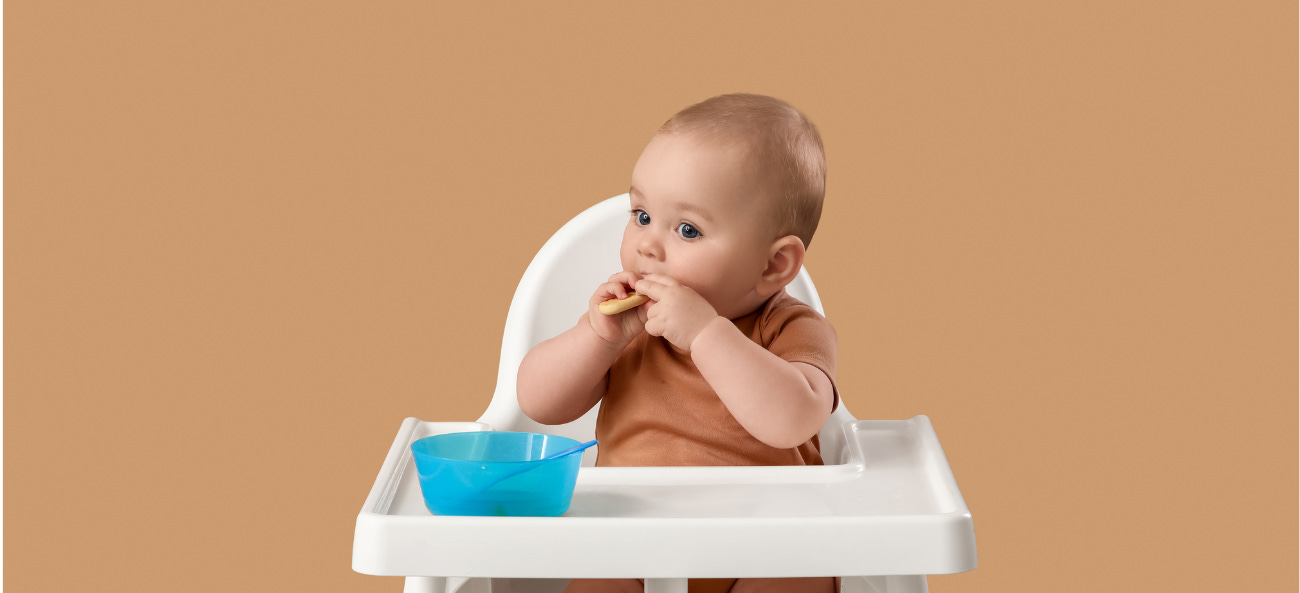
From the outside, it looks like a disaster zone. But developmentally, a baby who squishes, drops, throws, smears, licks, and spits out food is building essential feeding skills.
The Reality: Hand-eye coordination, learning how to release an object, mapping the boundaries of their mouth, and moving food from the front of the tongue to the back are all skills that must be practiced before meaningful intake can happen.
From a developmental perspective, that messy tray is exactly what success looks like.
The Fear Nobody Talks About
I think the real anxiety isn’t actually about today’s wasted sweet potato. It’s the terrifying mental fast-forward.
Parents watch a six-month-old reject a meal and instantly project into the future: What if my baby never learns to eat? What if they become a severely picky eater? What if they face nutritional deficiencies?
But learning to eat is a marathon measured in months and years, not a sprint measured in days and weeks. The first few weeks of solids tell us almost nothing about how your child will eat when they are two or three years old.
What Makes It Harder vs. What Actually Helps
When we get anxious, our instinct is to “help.” But sometimes, that help turns into pressure. We start chasing their mouth with the spoon, coaxing them, distracting them with screens, or trying to “just get one more bite in.”
Babies have an incredible radar for pressure. The moment a meal stops feeling like an exploration and starts feeling like a chore, they shut down.
Here is what to focus on instead:
- Celebrate the Micro-Wins: If your baby touched the food today, that counts. If they smelled it, that counts. If they licked it and spat it out, that counts too. Learning happened.
- Embrace the Mess: Mess isn’t a sign that dinner failed; it’s evidence that their brain is working.
- Stay Consistent: A refusal today tells you absolutely nothing about tomorrow. Keep offering without expectations.
- Change Your Metric of Success: Instead of asking, “How much did they eat?” ask yourself: Are they showing interest? Are they bringing things to their mouth? Are they becoming more comfortable sitting at the table with us?
A Final Thought to Leave You With
The beginning of solids is often much quieter and less dramatic than parents expect.
A baby who squishes a piece of steamed ragi stick for twenty minutes may actually be learning significantly more than a baby who passively swallows purée from a spoon while staring at a screen.
The goal isn’t to create a six-month-old who eats large meals. The goal is to raise a child who feels comfortable, curious, and confident around food. And that journey almost always starts with touching, playing, dropping, and exploring.
So if your little one isn’t eating much yet, take a deep breath. They are doing exactly what they need to do.
Disclaimer: While developmental milestones are a wonderful guide, every baby is different. If you have any concerns about your baby’s growth, physical development, or overall health, please consult your pediatrician.
Need Personalized Guidance for Your Baby’s Feeding Journey?
If you are feeling overwhelmed by the mess, worried about choking, or just want an exact, stress-free plan tailored perfectly to your child, let’s do it together.
Transform your mealtimes with my 10-Day Personal Session where you’ll get direct, step-by-step coaching to build your baby’s confidence (and yours!) from Day 1.
Let’s Chat in the Comments!
What is one food your baby has surprised you with so far — either by unexpectedly loving it or completely rejecting it?
Hit reply or leave a comment below. I read every single one, and chances are another parent reading this right now needs to hear that they aren’t alone!
If this article helped you feel more confident at mealtimes, you can receive weekly feeding insights directly in your inbox by subscribing to our newsletter- https://babyledweaningindia.substack.com/
Want more practical ways to simplify toddler feeding? Explore the full archive of guides on overcoming picky eating, food label tricks, and easy home-cooked recipes right here: BLW India Post Archive