There is something I notice whenever parents share pictures or videos of their babies eating.
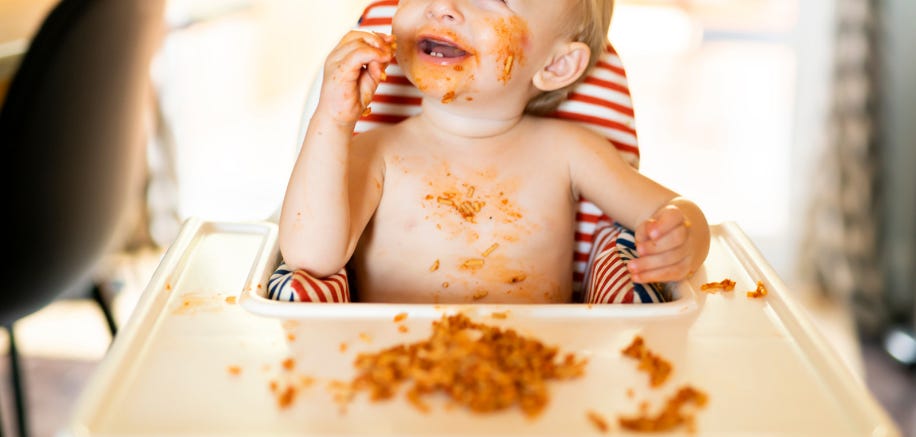
The baby takes a bite of curd rice. A little lands on the cheek. Some gets smeared across the tray. A tiny hand reaches into the bowl, squeezes a handful of dal-chawal, and then, somehow, the food ends up everywhere except where the parent intended it to go.
And before the next bite can even happen, a cloth appears.
Wipe the cheek.
Clean the fingers.
Remove the food from the tray.
Let’s get everything neat again.
I understand this instinct completely. We want our babies to be clean, comfortable, and well-fed. We don’t want food on their clothes, in their hair, or on the floor. And when we’re already exhausted from cooking, feeding, and cleaning, the last thing we want is an even bigger mess.
But there’s something worth understanding about those messy meals:
When babies explore food with their hands, they are doing much more than making a mess. They are learning about food.
And sometimes, in our efforts to keep feeding clean, we unintentionally reduce the very opportunities that build texture confidence.
Learning About Food
For adults, food is usually something we prepare, pick up, and eat. For babies, food is an entirely new sensory world.
Think about a bowl of dal-chawal. To us, it’s a familiar meal. We know its smell, taste, temperature, and consistency. We know what happens when we put it in our mouths. Your baby, however, is still figuring all of that out:
What happens when I touch it?
Is it warm or cool?
Is it smooth, sticky, grainy, or slippery?
Does it hold its shape when I squeeze it?
Does it stick to my fingers or slide off?
These tactile experiences help babies become familiar with the properties of food before, during, and beyond eating. Touching, squishing, spreading, smelling, and looking at food are all crucial steps in sensory processing.
A baby doesn’t have to swallow every food they encounter to learn something valuable from it.
That distinction is vital, particularly when parents worry that a meal was “unsuccessful” because very little food made it into the baby’s mouth. Sometimes, the most important learning happens through the hands first.
Why Texture Familiarity Matters
One major reason babies hesitate around unfamiliar foods is that the texture feels completely unexpected.
A smooth puree and a bowl of thick, grainy dal-chawal are very different sensory experiences. So are mashed banana, soft vegetable pieces, curd, and a piece of roti. Children need time and practice to process these tactile differences as their feeding skills develop.
When a baby handles food, they receive immediate feedback through touch. They see how it moves, feel its consistency, and gradually build familiarity. This makes the texture feel far less surprising when it finally touches their lips and tongue.
Consider offering your baby a soft, mashed vegetable for the first time:
- First attempt: They might touch it with one finger, pull their hand back, and refuse to taste it.
- Next attempt: They might squeeze a small amount between their fingers.
- A few days later: They might bring those food-covered fingers up to explore near their mouth.
- Eventually: They comfortably taste and swallow it.
Familiarity develops gradually, and swallowing is only the final step of a much longer process.
What Happens When We Wipe After Every Bite?
Let’s be clear: wiping your baby’s face isn’t harmful in itself. Keeping your child comfortable and cleaning food away when necessary are perfectly natural things to do.
The issue arises when every small smudge triggers an immediate, predictable interruption:
- Baby touches curd rice ➔ Hand gets wiped.
- Baby smears dal on cheek ➔ Face gets wiped.
- Baby reaches for food again ➔ Tray gets cleaned.
Over and over, the meal devolves into a cycle of exploration and sudden interruption.
For many babies, frequent wiping acts like a sudden “tactile alarm,” disrupting their concentration and making mealtimes feel unpredictable or unpleasant. Some become deeply frustrated when their hands are repeatedly wiped before they finish exploring.
If your baby is comfortably exploring a little mess on their hands or face, you don’t need to stop everything to clean them immediately. Wait until the meal is finished.
Can Messy Eating Really Help With Texture Acceptance?
Yes, hands-on exploration is a vital tool for sensory development. When babies encounter a range of food textures in a relaxed setting, they get to build familiarity without pressure. It helps to remember that texture is a complex part of eating:
- A child might like the flavor of a food but dislike how it feels in their hand.
- Another might happily touch a food but hesitate to put it in their mouth.
- Another might accept smooth purées but need gradual exposure to lumpier or firmer foods.
Messy play helps babies get used to food, but safety always comes first. Letting them explore with their hands works alongside safe posture, proper chewing, and correct food preparation.
Everyday Indian Foods Are Built for Sensory Exploration
One of the best parts about Indian family meals is that our traditional foods are naturally rich in diverse textures.
1. Dal-Chawal
Thick, soft dal-chawal is a wonderful texture to explore. Your baby may pat it, squeeze it between their fingers, or try picking up small clumps/balls. Adjusting the liquid content changes its consistency, providing a brand-new sensory challenge.
2. Curd (Dahi)
Curd is smooth, cool, and delightfully slippery. Babies can explore it directly with their fingers or practice dipping with a preloaded spoon.
3. Soft-Cooked Vegetables
Sweet potato, pumpkin, and well-cooked carrots offer rich colors, shapes, and firm-yet-soft consistencies. Babies can squeeze soft pieces or explore mashed portions at their own pace.
4. Mashed Banana
Banana is a perfect entry point for exploring soft, sticky textures. It can be mashed on the tray, offered via preloaded spoon, or served in age-appropriate spears.
Exploring Food vs. Eating Food
When parents see their baby “playing” with food, two common anxieties arise:
- “Should I stop them and show them how to eat properly?”
- “What if they’re just playing and not getting enough nutrition?”
Exploration and eating are not competing activities. Babies need both.
During early complementary feeding, breast milk or infant formula continues to provide primary nutrition, while solid food mealtimes build critical oral-motor and sensory skills. If your baby spends much of a meal exploring rather than swallowing, step back and look at the bigger picture: their energy, overall growth, milk intake, and growing comfort at the table.
5 Ways to Make Messy Meals Easier to Manage
You don’t need to surrender every surface of your home to food splatters. A little strategic setup makes sensory play manageable for everyone:
- Protect the space, not every bite: Place a washable splat mat under the high chair, use a silicone catcher bib, and serve small portions at a time.
- Let your baby touch before tasting: Place a small portion directly on the tray and let them investigate first without forcing their hands toward their mouth.
- Offer spoons alongside hands: Preloaded spoons allow your baby to practice utensil skills while keeping full control over bringing the bite to their mouth.
- Clean at natural pauses: Save the damp cloth for the end of the meal, unless food is blocking their nose, interfering with breathing, or causing visible distress.
- Keep safety non-negotiable: Always sit your baby fully upright and supervise closely. Messy eating is never an excuse to offer unsafe shapes or hard choking hazards.
What If Your Baby Hates Getting Messy?
Not every baby enjoys having food on their skin. Some babies happily squish dal-chawal, while others immediately pull away or reach for a cloth.
Both responses are entirely normal and worth respecting.
If your baby dislikes mess, offer a spoon, let them touch food lightly on their terms, or place small portions on a separate plate. You never need to force food onto a child’s skin to build sensory learning. The goal isn’t to create chaos. It’s to offer safe, comfortable opportunities to learn.
A Final Thought
When we start solids, it’s easy to focus solely on quantities: Did they finish the bowl? Did they swallow enough?
Consider asking a different set of questions today:
- Did they get a chance to explore?
- Did they have time to feel the texture?
- Did they feel relaxed and comfortable at the table?
Learning how food feels is just as important as learning how to swallow it. Put the cloth down for a moment, take a breath, and let your baby explore.
You can always clean the high chair after lunch. You don’t have to clean away the learning while it’s happening.
Over to you: Does your baby love squishing their food, or do they prefer to keep their hands clean? Drop a comment below. I’d love to hear what mealtimes look like in your home!
Check out our complete archive of expert parent guides here: BLW India Post Archive