In almost every BLW India consultation I run, the most frequent question parents ask me isn’t about recipes; it’s about weight gain. “Riddhi, how do I get them to eat more?”
My answer always surprises them:
Stop forcing bigger portions. Let’s make every single bite count.
If you feel constant anxiety about whether your toddler is eating “enough,” you are not alone. Toddler stomachs are roughly the size of their closed fist. When stomach capacity is that small, volume matters far less than density. Filling that tiny space with watery soups, diluted dal, or puffed snacks fills them up fast on volume, but leaves them under-nourished on actual energy.
Here is how to build a high-calorie, nutrient-dense plate without relying on processed junk or added sugar.
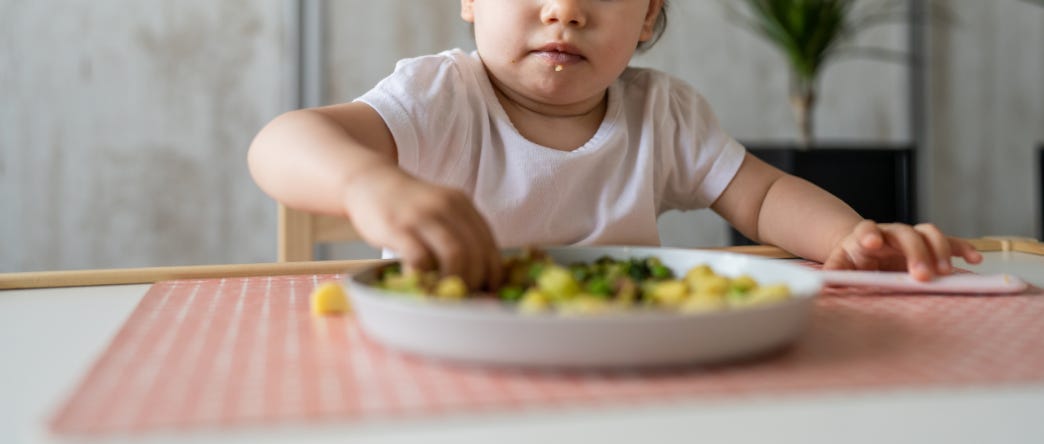
Caloric Density vs. Volume
A large bowl of soup or thin dal broth looks impressive, but it’s mostly water. Your toddler’s stomach stretches, signals “full,” and shuts down before receiving the fats, protein, and minerals needed for sustained growth and brain development.
- Low Density (Fills the stomach, low energy): Clear vegetable broth, plain puffed rice, diluted dal water.
- High Density (Small volume, maximum energy): Thick dal mash enriched with ghee, seed powders kneaded into roti dough, or dense avocado spreads.
By shifting your focus from how much food is on the plate to how nutrient-rich each bite is, you take the pressure off your child to eat massive quantities.
Healthy Fat Anchors for Indian Meals
Fats provide more than double the energy per gram compared to carbohydrates or protein, making them the most efficient way to boost calorie intake safely.
- A2 Ghee & Butter: Stir a generous spoon directly into hot khichdi, ragi porridge, or brush onto warm rotis.
- Nut & Seed Powders: Grind pumpkin seeds, sesame seeds (til), and almonds into a fine powder. Knead it directly into atta for rotis or mix it into morning porridge.
- Whole-Fat Curd & Paneer: Swap skimmed dairy for full-fat, thick hung curd. Grate fresh paneer into parathas, khichdi, or vegetable mashes.
- Sesame & Peanut Pastes: Mix white sesame paste (tahini) or smooth, unsweetened peanut butter into warm fruit purees, oatmeal, or dips.
Tips to Double Calorie Intake Effortlessly
- The Double-Dipping Rule: Serve soft finger foods (steamed sweet potato wedges, paneer sticks) alongside a calorie-dense dip like full-fat hung curd, hummus, or nut butter.
- Fat-Enriched Dough: Never make plain roti dough with just water. Substitute half the liquid with full-fat milk, a spoonful of curd, or 1–2 tablespoons of ground nut/seed mix.
- Prevent Chew Fatigue: Always moisten dry grains. Pair rice or roti strips with thick, ghee-laden dal or gravy so chewing requires minimal jaw effort.
- The Weekly “Super-Powder” Batch: Roast almonds, walnuts, pumpkin seeds, chia seeds, and white sesame seeds on low heat for 3–5 minutes. Blend into a fine powder and store in an airtight glass jar in the fridge for up to 3 weeks. Add 1–2 teaspoons to virtually anything like porridge, pancake batter, milk, or roti dough.
- Freeze Nut Butter & Avocado Cubes: Blend ripe avocado with a splash of lemon or freeze smooth nut paste in silicone ice cube trays. Pop one cube out directly into warm khichdi, oatmeal, or purees to instantly cool the food down while adding smooth fat density.
- Compound Ghee: Whip room-temperature A2 ghee with a pinch of nutmeg, cinnamon, or cardamom powder. Keep it on the counter to quickly brush over warm rotis, dosas, or steamed sweet potatoes for instant flavor and calorie elevation.
Simple Shifts
- Toddlers do best on a 3 small meals + 2 calorie-dense snacks structure. Expecting them to take all their daily energy in three large sit-down meals leads to fatigue and refusal.
- If self-feeding creates frustration or fatigue, dip the spoon into dense foods (like avocado mash or thick dal with ghee) and lay it on the tray. This encourages autonomy while ensuring every attempt carries maximum calories.
- Toddlers eat the most calories during the first 5 minutes of a meal when hunger cues are sharpest. Ensure the most nutrient- and fat-dense portion of the plate is front-and-center right when they sit down.
- Avoid offering water or milk right before or during the meal. Even a few sips of water fill up precious real estate in a fist-sized stomach, causing premature fullness. Offer small sips only after they’ve eaten a few bites.
High-Density Recipes
1. Paneer & Nut-Powder Stuffed Paratha (Meal)
- Ingredients: Whole wheat flour (atta), grated full-fat paneer, 1 tsp roasted almond/pumpkin seed powder, pinch of cumin powder, 1 tsp A2 ghee.
- How to make: Mix grated paneer with the seed powder and cumin. Stuffed into small, soft mini-parathas and cook thoroughly with ghee.
2. Creamy Avocado & Curd Mash (Snack)
- Ingredients: ½ ripe avocado, 2 tbsp full-fat hung curd, pinch of roasted cumin (jeera) powder.
- How to make: Mash the avocado smooth, whisk in thick curd and cumin until silky.
3. Ragi-Ghee Halwa (Snack/Breakfast)
- Ingredients: 2 tbsp ragi flour, 1 tbsp A2 ghee, 1 tbsp date puree or mashed banana, 1 tsp white sesame paste (tahini).
- How to make: Roast ragi flour in ghee until fragrant. Slowly add warm water/milk, whisking continuously. Swirl in banana puree and sesame paste until thick and warm.
Feeding a toddler doesn’t have to feel like a constant numbers game. By making tiny, nutrient-rich tweaks to the foods they already love, you can take a huge weight off your shoulders and off their plate. Try adding just one high-density boost to tomorrow’s meal, and watch how much simpler dinner becomes.
What is your go-to ingredient for boosting calorie density in your toddler’s meals? Let me know in the comments below!
Check out our complete archive of expert parent guides here: BLW India Post Archive